



Water & Environmental
FlowCam for Phytoplankton & Zooplankton Research and Analysis
Plankton are foundational to Earth's major systems - from fisheries to climate. Tracking how communities change is vital for understanding their global roles and local impacts. Because plankton can change rapidly in multiple ways (e.g., abundance, composition, size & shape), researchers need tools that keep pace with sampling demands while extracting as much information as possible from each sample.
High-throughput particle analysis with flow imaging microscopy helps labs expand capacity and generate richer, image-based datasets.
Researchers use FlowCam to quickly image large sample volumes, characterize a wide range of organisms, and quantify changes in plankton populations over time.

Digitize, Expedite & Scale Plankton Analysis
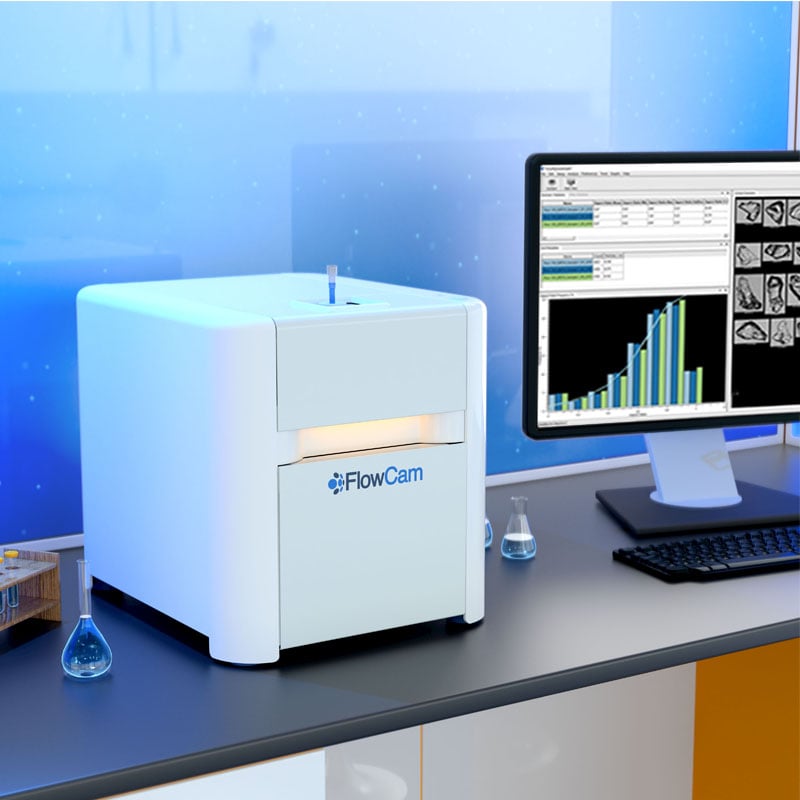
Flow imaging microscopy via FlowCam helps scientists by combining the optical benefits of microscopy with flow-based particle imaging to help modernize and scale direct plankton observations.
Quantitative imaging automatically reports a variety of measurements for every particle, allowing scientists to extract more information from every sample while simultaneously digitizing that sample for future analysis.
FlowCam uses image-based flow imaging microscopy to help biological oceanographers, plankton ecologists, and other researchers:
- Rapidly capture thousands of high-resolution plankton images per minute
- Gain accurate sample particle counts and size distributions
- Measure each particle across 40+ parameters
- Classify organisms using particle metrics and image recognition
- Use fluorescence triggers to distinguish algae and cyanobacteria based on pigment
“Using FlowCam, I’m able to see organisms in more detail and get well-focused, reproducible images virtually every time.”

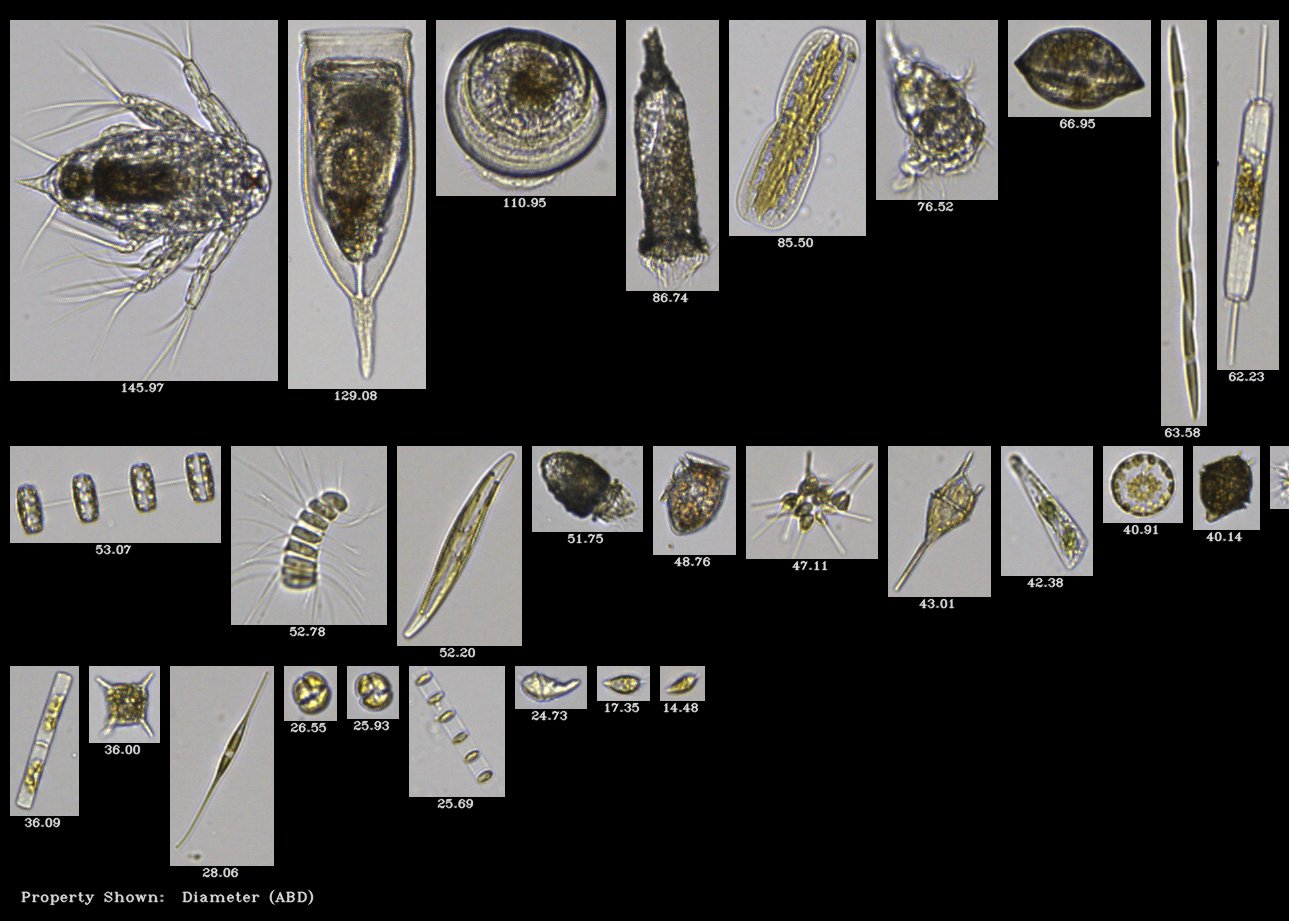
Marine phytoplankton, including harmful algae, from Casco Bay, Maine captured on FlowCam 8000 (10X).
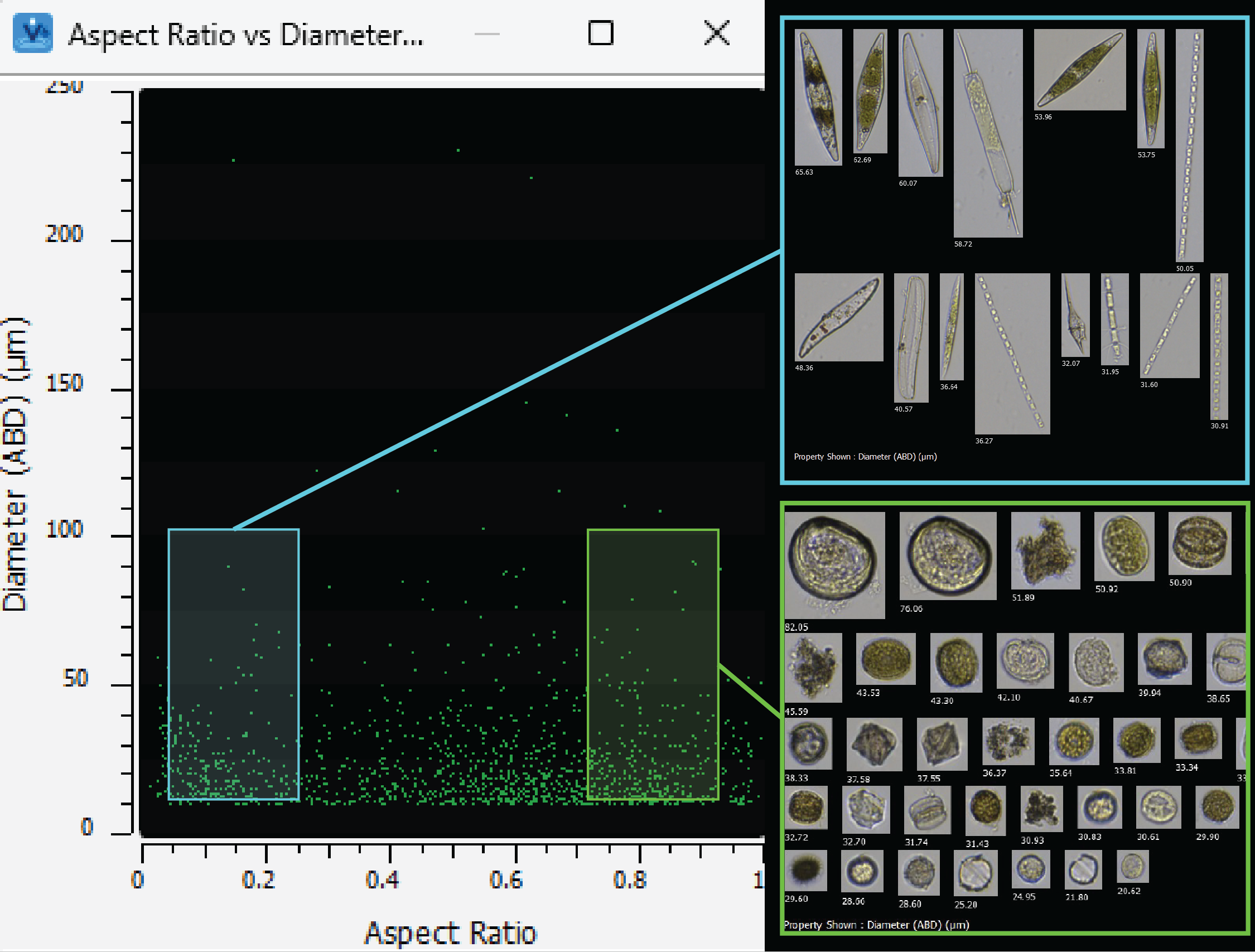
Marine phytoplankton assemblage (~20–80 µm), captured on FlowCam 8000. Morphological & fluorescence properties support image-based classification.
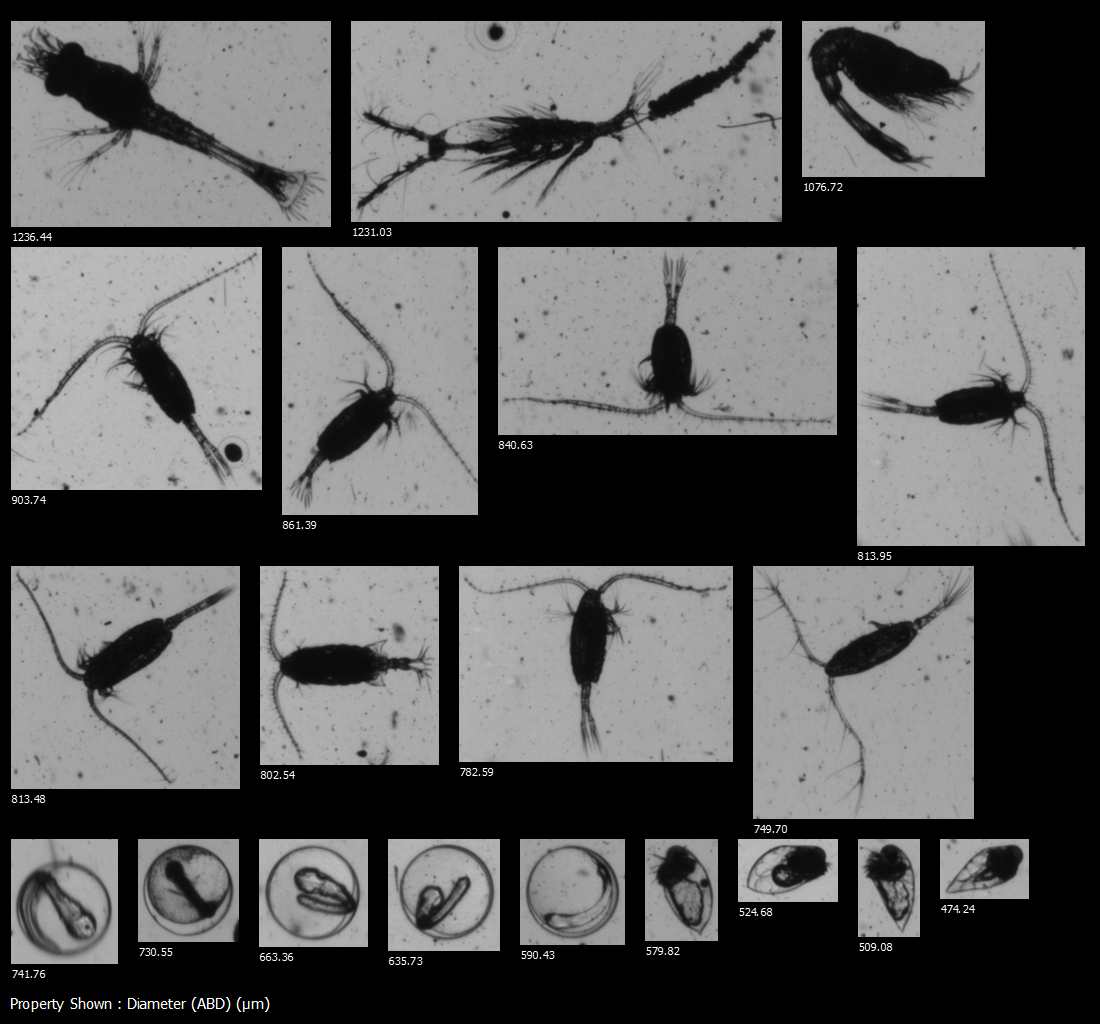
Marine zooplankton and fish eggs from the Damariscotta River (Maine, USA) captured on FlowCam Macro and sorted by size.
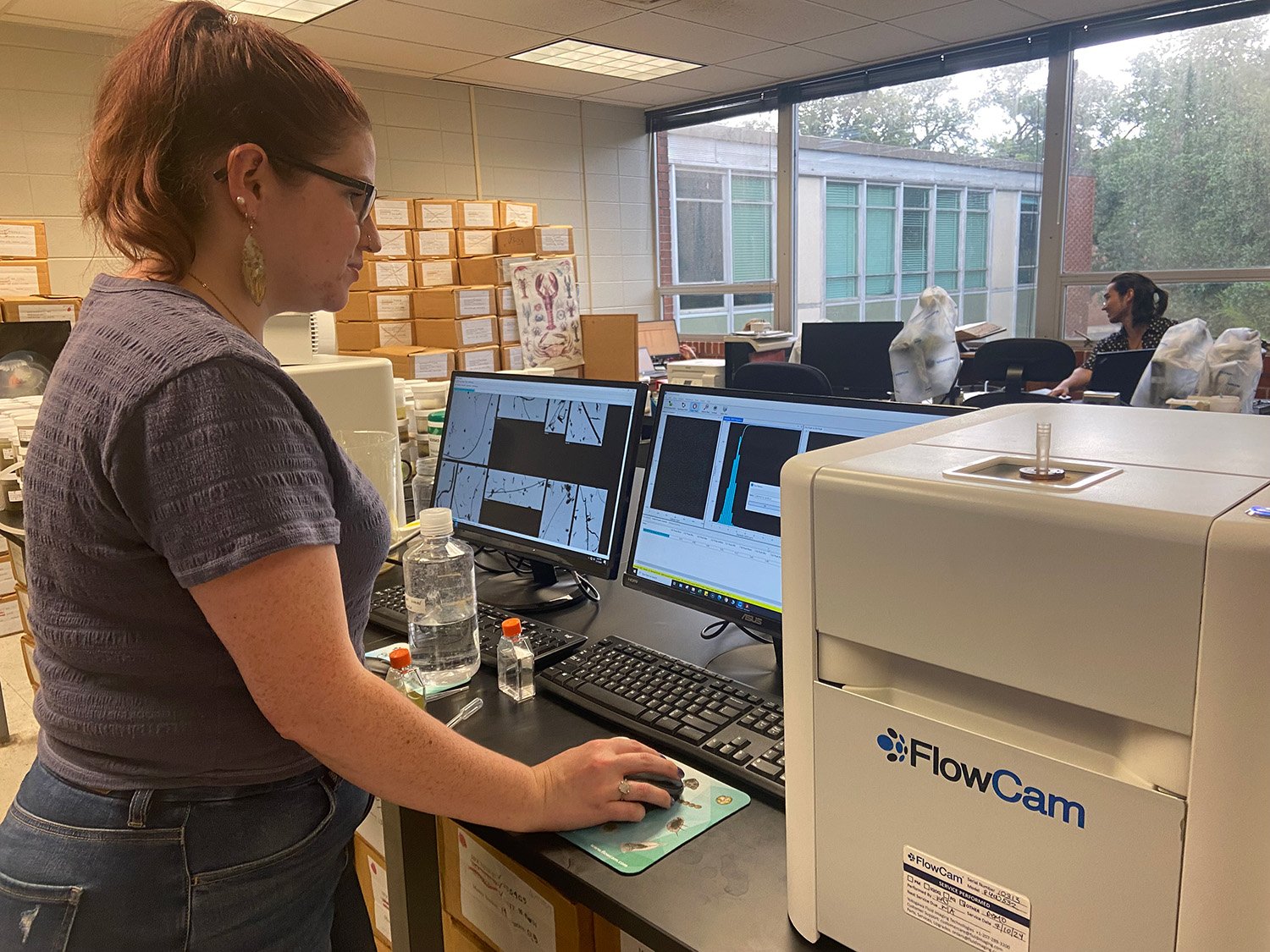
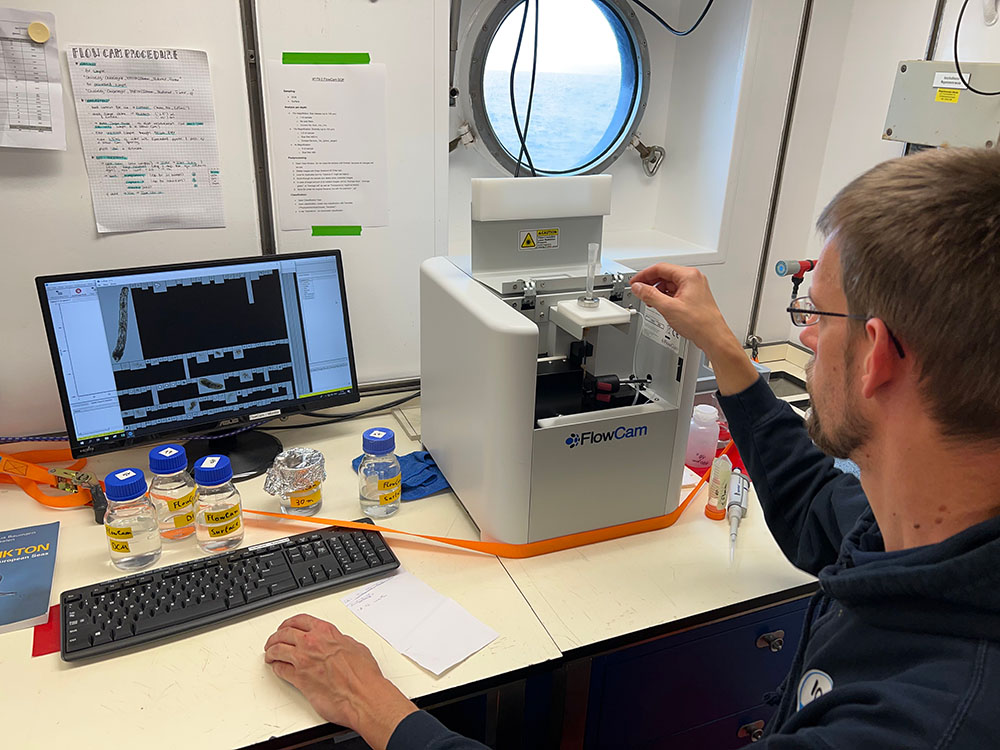
Using FlowCam 8000 to screen for harmful algae in samples from coastal Louisiana.
Enhance Phytoplankton & Zooplankton Analysis Capacity
High-throughput analysis of microscopic particles enables the rapid, repeatable measurement and characterization of phytoplankton and zooplankton communities. Automated image-based analysis vastly cuts time and costs involved with screening samples, quickly advancing scientists' understanding of harmful algal bloom dynamics, trophic relationships, biogeochemical cycles, and broader changes in aquatic ecosystems.
Using FlowCam, researchers can:
- Quantitatively track algal blooms to understand environmental factors driving initiation and decline
- Visualize and monitor shifts in phytoplankton phenology in a changing climate
- Estimate the contribution of different plankton groups to carbon export
- Characterize plankton communities in extreme environments (e.g., poles, hydrothermal vents)
- Increase spatial and temporal resolution of zooplankton monitoring to inform ecosystem management
- Investigate emerging contaminants like microplastics
Additional Resources
 Guides
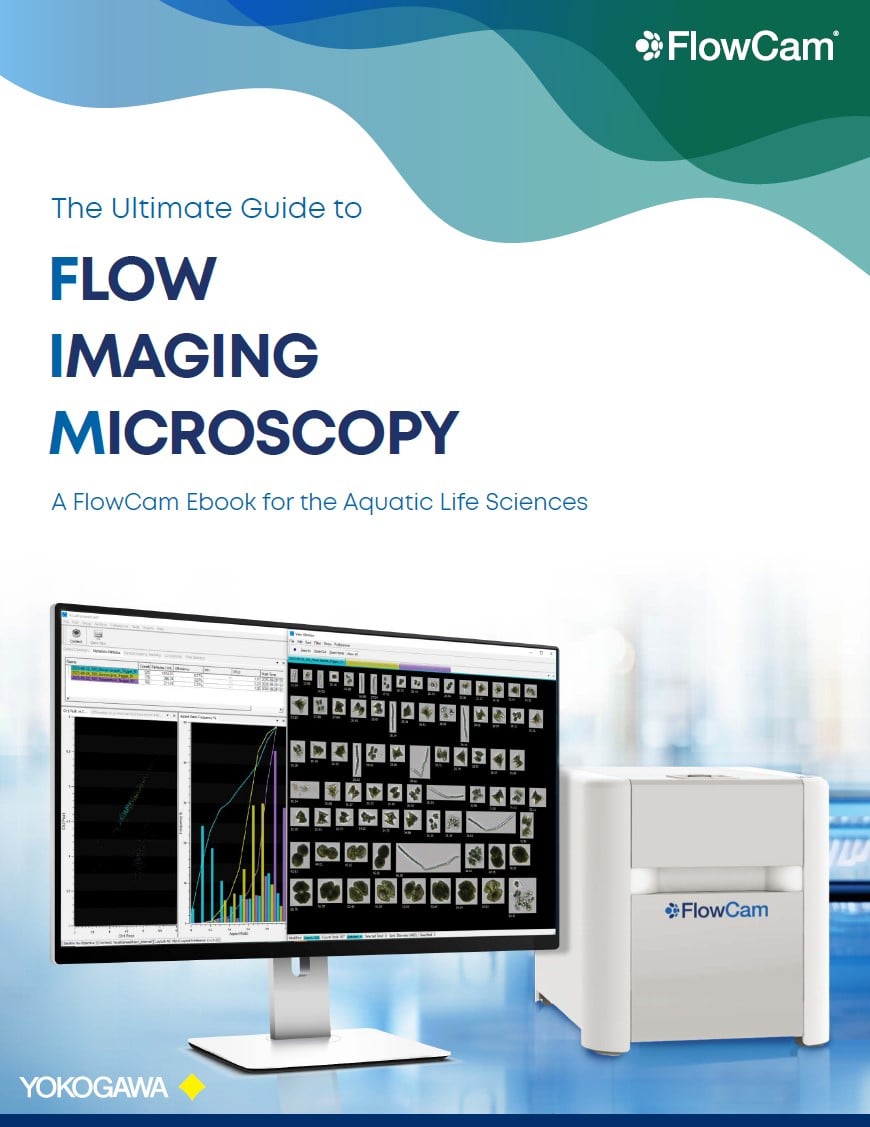
- Ultimate Guide to Flow Imaging Microscopy for Aquatic Life Sciences
- Phytoplankton Identification Image Gallery
- FlowCam Aquatic Image Galleries: Explore Sample Collages by Organism Type
 Published Research
- FlowCam Bibliography
- Recent Notable FlowCam Studies in Aquatic Research
- Summaries of Top Studies Comparing FlowCam to Light Microscopy
 Articles
 Videos
 Methodologies
 Case Studies
Interested in learning more?
-
Get in Touch
Tell us about your application and particle characterization needs.
-
Have a Conversation
We're happy to set up a call to discuss your application and answer your questions.
-
Discuss Next Steps
Expand your knowledge with a seminar, demonstration, sample analysis, or obtain a quote.
